 JobStep Safetyjobstepsafety.com
Read this to your crew
1. PPE is the last line, not the first
A guardrail protects everyone near the edge whether they remember it or not. A pair of safety glasses only protects the person wearing them, and only while they are on. That is why OSHA treats PPE as what you use when other controls are not enough:
“When engineering, work practice, and administrative controls are not feasible or do not provide sufficient protection, employers must provide personal protective equipment to their workers and ensure its proper use.”
So we still guard the saw, wet the dust and fence off the swing radius. PPE is what catches what gets through.
2. Head
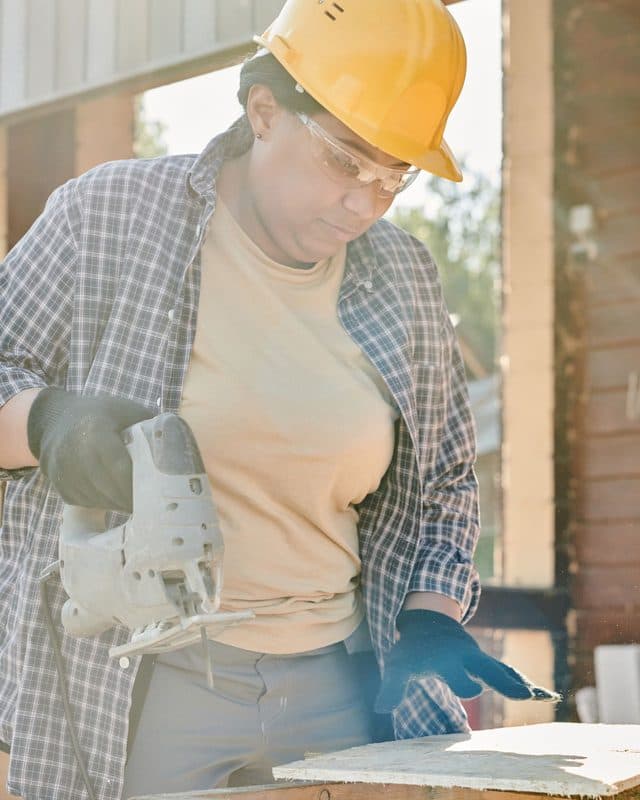
Where something can fall on you, swing into you or shock you, you wear a hard hat. [OSHA] It has to fit your head, so the suspension inside is set to you, not to whoever wore it last. [OSHA] A hat with a crack, a dent or a broken suspension does not get worn; it gets replaced. Protective equipment has to be kept in a reliable condition. [OSHA] Near high voltage, the hat also has to meet the electrical insulation part of the standard. [OSHA]
3. Eyes and face
OSHA's numbers on this are blunt:
“Thousands of people are blinded each year from work-related eye injuries that could have been prevented with the proper selection and use of eye and face protection.”
Grinding, cutting, chipping, nailing, drilling overhead, mixing chemicals: if something can fly, you need eye protection with side protection. [OSHA] Regular prescription glasses are not safety glasses. If you wear them, you need prescription safety glasses or goggles that go over yours without shifting them. [OSHA] Where the hazard is splash or molten metal rather than chips, the rule says eye or face protection suited to it, so check what the job calls for before you start. [OSHA]
4. Hands
Construction has no rule that names one kind of glove. The rule says protection for the extremities is provided and used wherever a hazard could injure them. [OSHA] So the glove has to match the hazard in front of you: a cut, a puncture, a chemical, heat or electricity. General industry's hand rule spells out how to choose, and it works on a site too: judge the glove by how it performs for the task, the conditions, how long it will be worn and the hazards. [OSHA] It has to fit as well, because PPE is chosen to fit the person wearing it. [OSHA] A torn or soaked glove is damaged gear, and damaged gear is replaced. [OSHA]
5. Feet and ears
Safety-toe boots, where the job needs them, have to meet the footwear standard OSHA names. [OSHA] Check the soles as well as the toes, and replace boots that are worn through: protective equipment is kept in reliable condition. [OSHA]
For hearing, the limit is 90 decibels averaged over an 8 hour day, and shorter at louder levels. When other controls cannot get the noise under that, ear protection is provided and used. [OSHA] Earplugs are fitted to each person by a competent person, and plain cotton does not count as hearing protection. [OSHA]
Head to toe: what and when
The construction rules in 29 CFR 1926 Subpart E and the noise rule, in one table:
| Protection | When it is needed | Rule |
|---|---|---|
| Head: hard hat | Possible head injury from impact, falling or flying objects, or electrical shock and burns. Near high voltage, a hat that also meets the electrical insulation section of the standard. | 1926.100 |
| Eyes and face | Flying chips or particles, molten metal, chemical liquids, acids or caustics, chemical gases or vapors, or harmful light such as welding arcs. Side protection wherever things can fly. | 1926.102 |
| Hands and arms | Any hazard that could injure the extremities: cuts, punctures, heat, chemicals, electricity. | 1926.95(a) |
| Feet | Where safety-toe footwear is needed, it meets the standard the rule names. | 1926.96 |
| Ears | Noise over the permissible exposure (90 dBA over 8 hours) that other controls cannot bring down. | 1926.52, 1926.101 |
| Lungs | Airborne hazards such as silica dust, fumes or vapors that other controls cannot keep below the limits. | 1926.103 |
Respirators have their own rule and their own program, with fit testing and medical clearance, so they get their own talk rather than a line in this one.
Check your gear
PPE that does not fit, or that is worn out, gives you the feeling of protection without the protection. OSHA's point is that fit decides whether you are covered or exposed. [OSHA] Have each person check their own:
- Fit. Every piece is chosen to fit the person wearing it. [OSHA] A hard hat that falls off when you bend, or glasses that slide down your nose, get swapped today.
- Condition. No cracks in the hard hat shell, no scratched-out lenses, no holes in gloves, no split soles. Gear is kept clean and in reliable condition. [OSHA]
- The right type. Eye and face protection is marked so the maker can be identified, and meets the ANSI eye protection standard. [OSHA] Look for the markings; a pair of sunglasses from the gas station is not safety eyewear.
- Your own gear counts too. If you bring your own, the employer still has to make sure it is adequate and maintained. [OSHA]
Who pays for PPE
This comes up on every crew, so here is the rule. PPE used to comply with OSHA rules is provided by the employer, and the worker pays nothing for it. [OSHA] The exceptions:
- Non-specialty steel-toe boots and non-specialty prescription safety glasses, when the worker is allowed to wear them off the job. [OSHA]
- Everyday clothing such as long pants, long-sleeve shirts and normal work boots. [OSHA]
- Ordinary weather gear such as winter coats, rain gear, ordinary sunglasses and sunscreen. [OSHA]
Replacements are paid by the employer too, unless the worker lost the item or damaged it on purpose. [OSHA]
Questions for the crew
- What is the job today that could hurt your eyes, and is your eye protection right for it?
- Take off your hard hat and look inside. Is the suspension whole and adjusted to your head?
- Which glove are you wearing, and is it the right one for what you are handling today?
- Where on this job is it loud enough that you have to raise your voice to talk at arm's length? Who has plugs?
A sign-in sheet prints after this talk. For a blank copy to use at other meetings, the free sign-in sheet template comes as a PDF or Word file.
What the law says
In construction, the employer is responsible for requiring the right PPE wherever workers are exposed to hazardous conditions:
“The employer is responsible for requiring the wearing of appropriate personal protective equipment in all operations where there is an exposure to hazardous conditions or where this part indicates the need for using such equipment to reduce the hazards to the employees.”
The details are in Subpart E: general criteria and payment in 1926.95, feet in 1926.96, head in 1926.100, hearing in 1926.101, eyes and face in 1926.102 and respirators in 1926.103. OSHA also expects workers to be trained in when PPE is needed, what kind, how to put it on, adjust, wear and take it off, its limits, and how to care for it. [OSHA]
When one task needs its PPE written down step by step, such as cutting, grinding or chemical cleaning, put it on a printable JHA template, where every step lists its hazards and controls. If you would rather hand it off, a Custom JHA writes one for your crew's actual task with the OSHA rules that apply.
More PPE talks
- PPE, the short version: for a quick morning huddle.
- Noise and hearing: a 5-minute talk on its own.
- Head and eyes as a daily topic: a one-minute reminder.
- 100 safety topics for daily toolbox talks: the free PDF, with the PPE topics grouped together.
The 52-Week Toolbox Talk Planner takes PPE one piece at a time across the year: eye and face protection in week 7, hearing in week 13, gloves in week 30, hard hats in week 39 and respirators in week 41.