 JobStep Safetyjobstepsafety.com
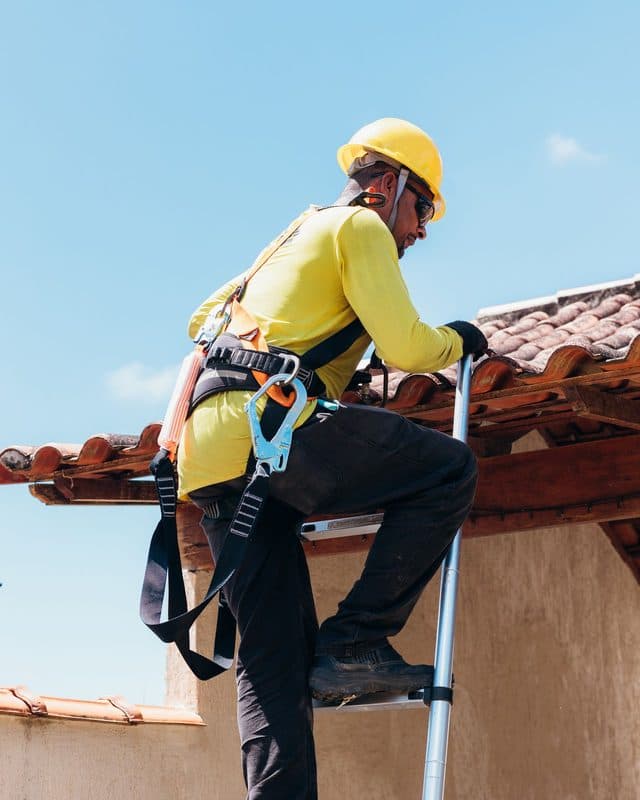
Read this to your crew
1. The tool everyone thinks they know
Nobody gets trained on a hammer, and most people treat a ladder the same way. OSHA does not:
“Falls from portable ladders (step, straight, combination and extension) are one of the leading causes of occupational fatalities and injuries.”
A ladder fall does not need much height. A slip off the third rung onto concrete, or a stepladder that walks out from under someone reaching sideways, is enough to end a career. Today is five minutes on getting it right.
2. Pick the right ladder
Before you carry a ladder anywhere, ask three questions. Is it long enough to reach without standing too high on it? Is it rated for you plus everything you are carrying up? A ladder may not be loaded past what it was built for or past the maker's rated capacity. [OSHA] And is there anything electrical where you are going? If you or the ladder could touch exposed live equipment, the side rails have to be nonconductive. [OSHA] OSHA's ladder card puts it simply: look for overhead lines before you handle a ladder, and avoid metal ladders near power lines or live equipment. [OSHA]
3. Set it up right
A leaning ladder goes out one foot for every four feet up to where it rests. [OSHA] It stands on a stable, level surface, never on boxes, barrels or a pallet to gain height. [OSHA] If it is going onto a roof or deck, it sticks up at least 3 feet past the edge so you have something to hold when you step on and off. [OSHA] If it is in a doorway, walkway or driveway, it gets tied off or barricaded so a door or a cart cannot knock it out. [OSHA] Keep the area at the top and bottom clear. [OSHA]
4. Climb it right
Face the ladder going up and coming down. [OSHA] Keep three points of contact, two hands and a foot or two feet and a hand, and keep your body near the middle of the step. [OSHA] That means tools go up in a bag, on a belt or on a rope, not in your hand. The rule is that nobody carries anything that could throw them off balance. [OSHA] And nobody moves, shifts or extends a ladder with someone on it. [OSHA]
If you have to lean to reach the work, the ladder is in the wrong place. Climb down and move it. That takes thirty seconds. A fall takes the rest of the season.
5. A bad ladder leaves the job
If a ladder has a broken rung, a split rail or any other defect, it does not go back on the truck with a note. It gets marked or tagged Do Not Use right away and stays out of service until it is repaired. [OSHA] Tell the supervisor so nobody else picks it up.
The setup numbers
The figures behind the talk, from OSHA's ladder rules for construction:
| What | The number | Rule |
|---|---|---|
| Angle of a leaning ladder | Foot out about 1/4 of the working length (1 out for every 4 up) | 1926.1053(b)(5)(i) |
| Job-made wooden ladder with spliced rails | Foot out 1/8 of the working length | 1926.1053(b)(5)(ii) |
| Climbing onto a roof or landing | Side rails at least 3 feet above the landing, or the top secured with a grab rail | 1926.1053(b)(1) |
| Load | Never more than the maximum intended load or the manufacturer's rated capacity, tools and materials included | 1926.1053(b)(3) |
| Step up or down that needs a ladder or stairs | 19 inches or more | 1926.1051(a) |
| Near exposed live electrical equipment | Nonconductive side rails | 1926.1053(b)(12) |
Check before you climb
OSHA tells users to inspect a ladder before every use. [OSHA] Read the list out, then have each person check the ladder they will use today:
| Check | Why |
|---|---|
| Rungs, steps and cleats all there, none broken, bent or loose. | Broken or missing rungs, cleats or steps are structural defects that take a ladder out of service. [OSHA] |
| Side rails straight, not split, cracked or corroded. | Split rails and corroded parts are on the same list of defects. [OSHA] |
| No oil, grease, mud or paint on the rungs, steps or feet. | Ladders are kept free of oil, grease and other slipping hazards. [OSHA] |
| Stepladder: the spreaders lock fully open. | Each stepladder has a metal spreader or locking device to hold the front and back open while it is used. [OSHA] |
| Extension ladder: both rung locks are engaged before anyone climbs. | OSHA tells users to be sure all locks on an extension ladder are properly engaged. [OSHA] |
| Feet present and in good shape, especially on concrete or metal decks. | On slippery surfaces a ladder is secured or has slip-resistant feet, and those feet are not a substitute for care in setting it. [OSHA] |
| Labels readable: type, duty rating and the maker's instructions. | OSHA's first ladder rule for users is to read and follow every label and marking on the ladder. [OSHA] |
Stepladder or extension ladder
The two work differently, and most misuse comes from treating one like the other.
| Stepladder | Extension or straight ladder | |
|---|---|---|
| How it stands | On its own, fully open with the spreaders locked. Never folded and leaned against a wall like a single ladder. [OSHA] | Leaning on a support, at about 4 to 1, with both rails resting evenly at the top. [OSHA] |
| Highest place to stand | Not the top, and not the top step. [OSHA] | Not the top three rungs. [OSHA] |
| Getting onto a roof | Not for this job: it is never leaned up as a single ladder, so it cannot reach past the edge. [OSHA] | Reaches 3 feet or more past the landing. [OSHA] |
| Common misuse | Climbing the cross-bracing on the back, unless it was built with steps on both sides. [OSHA] | Setting it too steep or too flat, or extending it with someone on it. [OSHA] |
Questions for the crew
- Which ladder are you using today, and what is its duty rating? What will you be carrying up?
- Is there any power line or live panel near where that ladder will go?
- Where does the ladder to the roof or deck land, and is it 3 feet above the edge and tied off?
- Which ladder on this job would you not climb right now, and why is it still in use?
A sign-in sheet prints after this talk. For a blank copy to use at other meetings, the free sign-in sheet template comes as a PDF or Word file.
What the law says
Ladders on construction sites fall under 29 CFR 1926 Subpart X. A ladder or stairway is needed wherever the step up or down is 19 inches or more:
“A stairway or ladder shall be provided at all personnel points of access where there is a break in elevation of 19 inches (48 cm) or more, and no ramp, runway, sloped embankment, or personnel hoist is provided.”
How ladders are built, set up and used is in 1926.1053, including the inspection rule: a competent person looks ladders over for visible defects periodically and after anything that could affect their safe use. [OSHA] And every employee who uses ladders gets trained, as necessary, by a competent person, to recognize ladder hazards and follow the procedures that reduce them, with retraining when it is needed. [OSHA]
When ladder work is one step in a bigger task, such as hanging fixtures or work at a roof edge, put the steps, hazards and controls on a printable JHA template. If you would rather hand it off, a Custom JHA writes one for your crew's actual task with the OSHA rules that apply.
More talks on working at height
- Fall protection toolbox talk: the 6 foot rule, guardrails, harnesses, holes and rescue.
- Ladders, the short version: for a quick morning huddle.
- Ladder setup as a daily topic: a one-minute reminder.
- 100 safety topics for daily toolbox talks: the free PDF, with the ladder and scaffold topics grouped together.
The 52-Week Toolbox Talk Planner covers ladders in week 4, then falls for five weeks in the spring: when fall protection is required, harness checks, guardrails and covers, scaffolds and aerial lifts.